
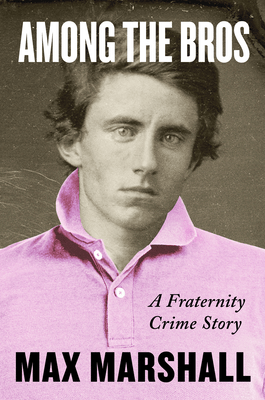
A modern, journalistic update of Evelyn Waugh’s Vile Bodies, Among the Bros, by Max Marshall (2023), exposes our most illustrious young minds as the most drug-addled decadents approaching the infamy of the worst Roman emperors. But far more damning is the light it shines on the enabling, indulgence, and corruption of the adults: parents, attorneys, politicians, law enforcement, business leaders, and far from least, universities and colleges themselves. In 2016, after a raft of hazing-related deaths at the national level and the College of Charleston drug ring bust and Patrick Moffly’s murder, popular sentiment was beginning to turn against fraternities as–undeniably, based on this book–associated with institutional racism, rape culture, and toxic masculinity. That summer, the Kappa Alpha national office ran drug tests on College of Charleston members that produced a 90 percent failure rate, resulting in the members themselves voting to close the chapter (for lack of sufficient members, not from shame). The chapters of Alpha Epsilon Pi, Sigma Nu, Pi Kappa Phi, and Beta Theta Pi were also suspended, and President McConnell of College of Charleson announced a fraternity and sorority drug and alcohol ban. If universities nationwide would agree to ban fraternities and sororities we might chip away at much-needed systemic change. College students are quite capable of partying and forming lasting connections without them (as did I and my peers at our college which had and has no fraternities).
But then the pussy-grabber-in-chief was elected, Brett Kavanaugh, the ultimate frat bro, escaped accusations of rape by Christine Blasey-Ford to become a Supreme Court justice, and in 2020 the college reinstated the same fraternities. Only one member of the drug ring went to jail for any length of time, Mikey Schmidt, and that was because he had direct ties to cartel distributors and nowhere to hide.
The worst are the enabling parents, who loosely share the paradigm of Alec Murdaugh and his son and murder victim Paul, both addicts living with self-indulgent impunity at the top of the social hierarchy. Patrick Moffly’s parents threw him a $70k funeral to memorialize a young man killed while conducting a drug deal. At the party attended by hundreds, the drinking, weed, and orgies continued under the eyes of parents and police. Dad David Moffly: “It was a fucking knockout party.” (His website: https://www.mofflyconstruction.com/ab…) Though there isn’t enough data to draw strong conclusions, parental failure at national scale is evident here, and not among the poor and resource-deficient, but among those with all the power, money, and privilege to do the right thing.
The book concludes, “If the fallout from the drug bust has taught them [the men caught in the drug ring] something, it’s that as long as you’re one of the boys, you can usually go as hard as you want without having to learn anything. If someone tries to stop your fun, you’ll find good lawyers and reasonable judges, and if the outside world sees you as a villain, you can always play the heel. As one fraternity lobbyist in a large state capital told me, although the young men he represents know they’re seen as deplorables by some classmates, in private they assure him, ‘They’ll all be working for us someday.'”
When I began reading this book, I was under few illusions about fraternities or college drink and drug culture, those having been exposed over many years in the media. None of this comes as a surprise. The more serious indictment is how the larger culture continues to permit fraternities to coalesce white toxic masculinity at the top of the capitalist food chain. As Marshall points out, in Greek life “lies one of the major breeding grounds of American power: 80 percent of Fortune 500 executives, 85 percent of Supreme Court justices, and all but four presidents since 1825 have been fraternity members.” It makes more sense to see the PGOTUS elections as serving to maintain this hegemony than to lay all the blame at the feet of the under-educated electorate.
Kappa Alpha’s origin story in the early 20th century was intended to shore up the Confederate Lost Cause as the inner, character-shaping branch of the two-pronged white supremacist pincer move, the other prong of which was the KKK. It continues to teach boys that its “knights” rose after the Civil War to defend women’s purity (raping them while under the influence of roofies apparently counts because the rapists are white). Fraternities legitimize and justify themselves by looking back to the lineage of Western culture: “Medieval heroes are part of the classic fraternity man blend, a mix of Greek philosopher, feudal knight, Victorian gentleman, and American world leader,” embodied for Kappa Alpha in Confederate General Robert E. Lee.
Such mythologies, like the myth of Jeffrey Epstein’s financial genius, do the work of disguising brutality, sadism, torture, financial expropriation within (and without) the law, and, occasionally, murder to make them palatable for the quiescent masses.
 Jana Giles